

Gratitude is easy when life goes our way. Forgiveness? That can take a little more practice—especially when our mental scoreboard has an excellent memory! As we approach the holiday season, we're reminded of the importance of thankfulness, yet this can also be a time when unresolved hurts, unmet expectations and family dynamics challenge our ability to experience genuine joy.
In a recent conversation on the Power of After Show, my husband, Greg, and I explored how gratitude and forgiveness work together to help us move beyond resentment and make room for greater peace and purpose. Drawing on principles from my book, MOVE BEYOND: From Brokenness to Purpose, we discussed how recognizing the thoughts that keep us stuck and choosing a more truthful perspective can transform our relationships and our lives.
Gratitude doesn't require us to ignore what hurts, and forgiveness doesn't require us to abandon healthy boundaries. Both involve intentional choices that can lead toward restoration. Sometimes, that next step begins with a simple thank-you, a willingness to forgive ourselves and an appreciation for where we are right here and now.
ONE: Recognize What Keeps You Stuck
TWO: Practice Gratitude Without Pretending
THREE: Forgive While Keeping Wise Boundaries
Forgiveness and gratitude are closely connected, particularly in long-term relationships.
Greg shared that when he needs to forgive me, he often mentally reviews the many things he appreciates about me. Remembering the larger picture helps put a particular offense into perspective.
After many years of marriage, he's had plenty of opportunities to practice this!
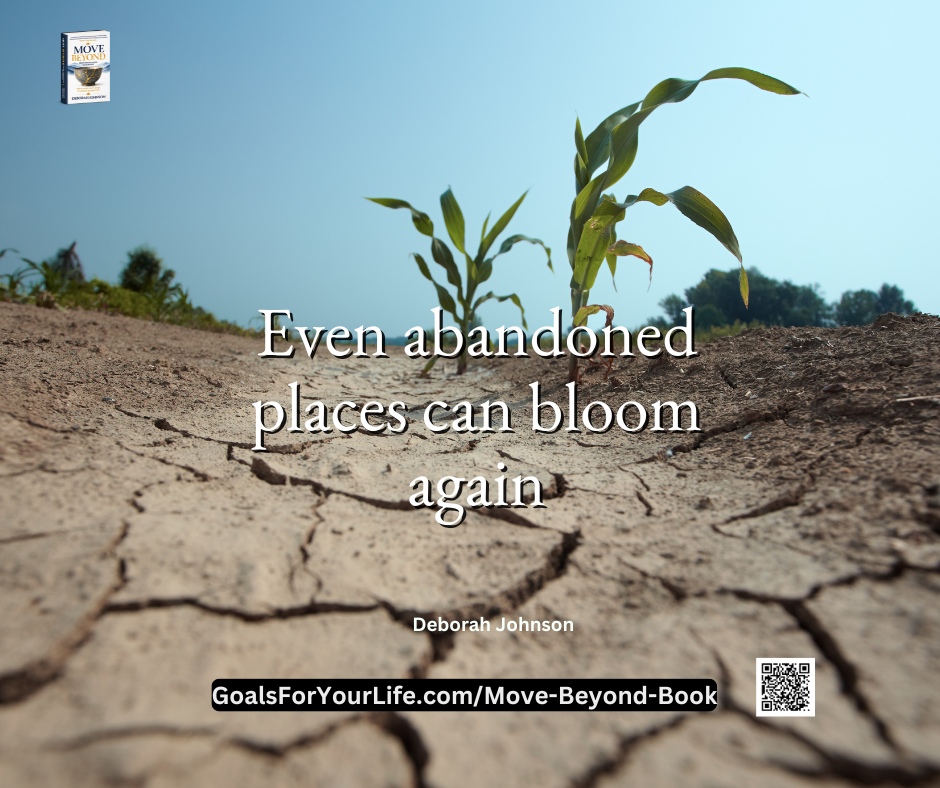
Every meaningful relationship begins with respect. As respect grows, emotional trust develops, allowing friendships and family relationships to deepen. However, hurts can diminish that trust. When resentment remains unresolved, the relationship may become stuck at a shallower level.
Forgiveness creates an opportunity for trust to be rebuilt. But an opportunity is not a guarantee.
Get your copy: MOVE BEYOND: From Brokenness to Purpose
This distinction is extremely important. Forgiveness does not excuse harmful behavior, erase consequences or automatically restore trust. Trust must be earned and rebuilt through consistent, dependable actions.
In several of my books, I discuss the importance of our close circles. Not everyone belongs in our innermost circle, and that's okay. Some relationships can only safely exist at a certain level of emotional intimacy.
Wise boundaries allow us to release resentment without continually exposing ourselves to the same destructive patterns. Sometimes, rebuilding a relationship requires honest conversations and a willingness on both sides to respect those boundaries.
Other relationships may never be fully restored. Nevertheless, forgiveness can help us experience personal freedom even when reconciliation is not possible.
TAKEAWAY: Consider a relationship where resentment has diminished emotional trust. What would forgiveness look like? What boundaries would be necessary? Remember that releasing resentment does not require surrendering wisdom.
FOUR: Turn Your Attention Outward and Forgive Yourself
We often think about forgiveness in terms of what others have done to us. Yet some of the most persistent criticism comes from within.
My ongoing struggles with directions provide a relatively lighthearted example. But how many times have we criticized ourselves for the same weakness, mistake or perceived failure?
When we continually beat ourselves up, our focus narrows. We become so absorbed in our shortcomings that we overlook the people and opportunities around us.
It's easy to board what I call the blame and shame train. Unfortunately, that train can keep circling without ever arriving at a productive destination.
There is a difference between taking responsibility and continually condemning ourselves. Responsibility encourages learning, growth and corrective action. Persistent shame can discourage us from aspiring to anything better.
As Greg pointed out, when we remain excessively self-focused, we undermine our ability to participate meaningfully in relationships.
Turning our attention outward doesn't mean ignoring our own needs. It means recognizing that our mistakes do not have to consume our identity or determine our future.
An encouraging word, a thoughtful note or a simple act of kindness can help redirect our attention toward others. We may discover that extending gratitude also helps us develop a healthier perspective toward ourselves.
TAKEAWAY: Identify something for which you need to forgive yourself. Acknowledge what you can learn, then redirect your energy toward encouraging or helping someone else.
FIVE: Put Restoration Into Practice
Restoration is not a one-time decision. It is a continuing process of making choices that eventually become habits.
Greg shared a familiar principle:
- Sow a thought, reap an action.
- Sow an action, reap a habit.
- Sow a habit, reap your destiny.
It all begins with a thought.
Romans 12:2 encourages us to be transformed by the renewing of our minds. This timeless biblical principle reminds us that our thinking is not permanently fixed. Our minds can be renewed, our attitudes redirected and our habits transformed.
One practice that has helped me tremendously is journaling. I don't necessarily write pages every day. Sometimes, a few lines help me untangle my thoughts, identify what is true and recognize where forgiveness is needed.
Writing also allows me to see my progress. Situations that once seemed overwhelming often become clearer when I put them into words.
I've often said that I never wanted to become a bitter, angry old lady. Well, the years are certainly adding up, so I'd better keep working on the grateful part!
We become what we repeatedly practice. Choosing bitterness can develop a bitter disposition. Choosing gratitude can cultivate a more joyful, generous and resilient spirit.
TAKEAWAY: Choose one daily practice this week: write down something you appreciate, interrupt a recurring grievance, express encouragement or spend a few moments reflecting on biblical truth. Repeat it until it becomes a habit.
Moving Beyond Toward Peace and Purpose
As you enter this holiday season, remember that gratitude and forgiveness are not dependent upon perfect circumstances, perfect relationships or even perfect holiday gatherings.
They begin with choices.
Recognize what keeps you stuck. Practice honest gratitude. Forgive while maintaining wise boundaries. Extend forgiveness to yourself and turn your attention outward. Then put restoration into practice, one intentional step at a time.
We cannot rewrite yesterday, but we can influence what we carry into tomorrow.
Gratitude helps us recognize the goodness that remains. Forgiveness helps us release what keeps us from fully experiencing it. Together, they open the door to greater peace, restoration and purpose.
What could change in your life if thankfulness and forgiveness became practices you returned to every single day?
Additional Resources
Move Beyond: From Brokenness to Purpose by Deborah Johnson: Now on Amazon & other retailers! "Beauty isn't found in what was never broken; it's revealed in what has been restored.“
Women at Halftime: Principles for Producing Your Successful Second Half by Deborah Johnson: Will you merely face into the second half of life, operating with a tired and outdated strategy, living on autopilot? Or will you successfully reinvent yourself and climb to your personal peak of Hero Mountain? Chapter 4 includes Core Common Denominator®
Power of After: What’s Next Can be Your Most Purposeful Chapter by Deborah Johnson. This book helps you answer the crucial question, "What's next?" as you create your ideal business using AI and other current technologies.
Stop Circling: Steps to Escape Endless Roundabouts: provides both the inspirational perspective and solid tools to design an individual or professional future path and to get individuals there successfully.
Get The SUMMIT on Amazon here: https://amzn.to/4z3mDIs
HALFERS Position Free Download
YouTube Channel: Mindset & Mental Strength for Mid-Career Growth
Personalized Mentorship: Thoughtful guidance for your next chapter creating clarity, confidence & momentum.
The Summit book by Deborah Johnson
Goal Setting Worksheets-free download!
Hero Mountain Summit- a 5-month "Power of After" journey to help you answer "What's Next?" with your desired lifestyle & maximized skills and experience.
FREE Resources and links: https://GoalsForYourLife.com/DJWorks
YouTube Podcast Playlist: Women at Halftime/Power of After
- about Greg & Deb
GREG joins DEBORAH as a co-host on Power of After Show (formerly Women at Halftime Podcast)
GREG JOHNSON is a former professional athlete, a triple A relief-pitcher with the Cleveland Indians (now Guardians) He also has years of experience in sales and as an R.I.A. (Registered Investment Advisor), owning his own business. He & Deb met on a blind date and have been married over 40 years.
Recognizing the thoughts that keep us stuck and choosing a more truthful perspective can transform our relationships and our lives.
deborah johnson
Thought Leader, Keynote Speaker, Author
If you are interested in growing and learning, check out our online courses here: Online Learning
1,674 words
