
There are certain people who walk into a room carrying a calm confidence that immediately captures attention. It isn’t loud. It isn’t flashy. It’s grounded. Steady. Focused. Former Navy SEAL Marty Strong embodies that kind of presence, but what makes his story especially compelling is not merely his military background—it’s his repeated willingness to reinvent himself.
From Navy SEAL to financial advisor, from counterterrorism consultant to healthcare executive, from novelist to nonprofit founder, Marty Strong has repeatedly stepped into unfamiliar territory with the mindset of an apprentice rather than the ego of an expert. That perspective matters deeply today.
We are living in an era of massive technological disruption, career transitions, and cultural uncertainty. Many professionals at mid-career or halftime of life are asking the same question: “What’s next?” Some feel stuck. Others feel overwhelmed by change. Still others quietly wonder whether they still have relevance in a rapidly evolving world shaped by AI, automation, and constant reinvention. Included here is not only military wisdom, but a framework for adaptability, courage, and growth that applies to anyone navigating change—whether in business, leadership, creativity, or life itself.
What Holds Us Back
One of the most powerful moments of my conversation came when we addressed why so many people remain stuck despite unlimited access to books, podcasts, courses, and self-help material. More people aren’t moving forward because we often become like the people and environments surrounding us.
We discussed how culture has tremendous influence over mindset. If people constantly surround themselves with negativity, criticism, fear, or complaint-driven thinking, those attitudes become normalized. Eventually, discouragement feels familiar and comfortable.
On the other hand, when people surround themselves with positive, growth-oriented individuals who pursue challenges with resilience and humor, they begin moving in that direction themselves.
This principle applies far beyond the military. At halftime of life, many professionals unknowingly remain surrounded by:
- Limiting beliefs
- Fear-based thinking
- Cynicism
- Complacency
- People who discourage risk or creativity
- Negative workplace cultures
- Social circles resistant to growth
Over time, these influences quietly shape expectations and confidence. Marty explained that in Navy SEAL training, candidates are intentionally placed under extreme pressure to reveal who can remain grounded, adaptable, and positive in difficult situations. Those environments expose mindset quickly. Most people will never endure SEAL training, but everyone experiences pressure from career loss, economic uncertainty, divorce, health struggles, entrepreneurship, aging parents, rapid technology shifts, reinvention at midlife.
What often holds people back is not lack of intelligence or talent. It is fear reinforced by environment. Intentionally seeking people who think bigger, stay resilient, laugh through adversity, pursue meaningful goals, encourage growth and stretch your perspective will strengthen that environment. This is especially important in a digital culture filled with anxiety, outrage, and comparison.
The people around us influence our courage, standards, emotional resilience, expectations and even our willingness to try. At mid-career, choosing your environment carefully becomes essential.
Formula for Success
Near the end of the conversation, Marty shared a simple but powerful three-part framework for growth, leadership, and reinvention. It begins with what he calls Intellectual Humility. This means setting aside arrogance, assumptions, and fear long enough to admit:
- You do not know everything
- You still have more to learn
- Your past success does not guarantee future success
- There may be better approaches outside your current thinking
Humility is not weakness. It is openness. Without humility, growth stops. This principle becomes increasingly important during times of rapid technological change. AI, automation, and digital tools are reshaping industries quickly. Professionals who refuse to learn new systems or rethink old assumptions risk becoming stagnant.
The second step is Intellectual Curiosity. Curiosity creates expansion. Curious people seek information from outside their normal circles. They ask questions. They listen to differing perspectives. They study new ideas. They intentionally broaden their understanding. Curiosity keeps people mentally alive.
Unfortunately, many professionals become overly confined by routine, organizational culture, or expertise. They stop exploring because they assume they already know enough. But curiosity fuels adaptability. This is especially important at mid-career when reinvention often requires:
- Learning new technologies
- Understanding changing markets
- Exploring new business models
- Expanding communication skills
- Reimagining lifestyle design
Curiosity helps prevent rigidity. The third step is: Intellectual Creativity. Creativity emerges when humility and curiosity combine. Creativity is not reserved for artists or musicians. It is the ability to solve problems, imagine possibilities, and think beyond rigid systems. Yet many adults suppress creativity because years of institutional structure condition them to seek only “correct” answers. Schools, workplaces, and organizations often reward compliance more than innovation.
Eventually, people stop experimenting. They stop asking What if? Why not? Is there another way? What could be improved? Creativity requires courage because creative thinking always risks rejection. Like Mallery in The Summit, we often have to learn how to use the keys we’re given—our experiences, creativity, courage, and growth—to unlock the doors ahead. Through that journey, she discovered her true identity as Andriette and ultimately climbed Hero Mountain successfully.
Creativity is essential for growth, leadership, entrepreneurship, and reinvention. Especially now. As AI handles more repetitive and information-based tasks, uniquely human creativity becomes increasingly valuable.
Courage for Creativity
One of the most fascinating sections of the interview centered around Marty’s work with a competitive robotics organization. He observed teams of young students rapidly prototyping robots, solving problems collaboratively, and fearlessly experimenting under pressure. What struck him most was how naturally creative the students were. No one had “taught” them creativity. They simply had permission to think.
That observation led Marty to study creativity more deeply. He concluded that human beings are biologically wired for creativity, but many lose confidence in it through years of conformity and rigid systems. People are often taught to stay in their lane, follow the formula, not to disrupt, risk failure or challenge assumptions.
Eventually, many adults become hesitant to try anything unfamiliar. This becomes especially dangerous at halftime of life. Some professionals stop dreaming altogether because they fear looking foolish, starting over, failure, criticism, technology, being “too old” or rejection. That includes pretty much everything!
But creativity requires courage! Courage to learn new skills, ask beginner questions, Try new business ideas, write, launch a podcast, speak, build a company, change careers and so much more. This applies far beyond military veterans.
It applies to mid-career professionals, entrepreneurs, creatives, leaders, retirees, educators, parents and most anyone asking “What’s Next?” You don’t need to wait for permission before pursuing meaningful ideas. Reinvention rarely arrives through certainty. It usually begins through experimentation.
Final Thoughts of Application
Calm under fire is not merely a military concept. It is a life skill. It is the ability to remain grounded during uncertainty, transition, challenge, and reinvention. Success rarely follows a straight line. Reinvention requires humility, courage, curiosity, and persistence. Most importantly, it requires the willingness to become teachable again.
At halftime of life, many people assume their best years are behind them. But perhaps the opposite is true. Perhaps this season is the moment to combine experience, discipline, creativity, curiosity, technology and purpose into a more meaningful and impactful next chapter. And maybe the greatest strength of all is not mastering every situation—but remaining willing to learn through every transition.
Additional Resources
More about Marty Strong, his work and books here: https://martystrongbenimble.com/
Non-Profit serving our veterans: Warrior’s Haven USA
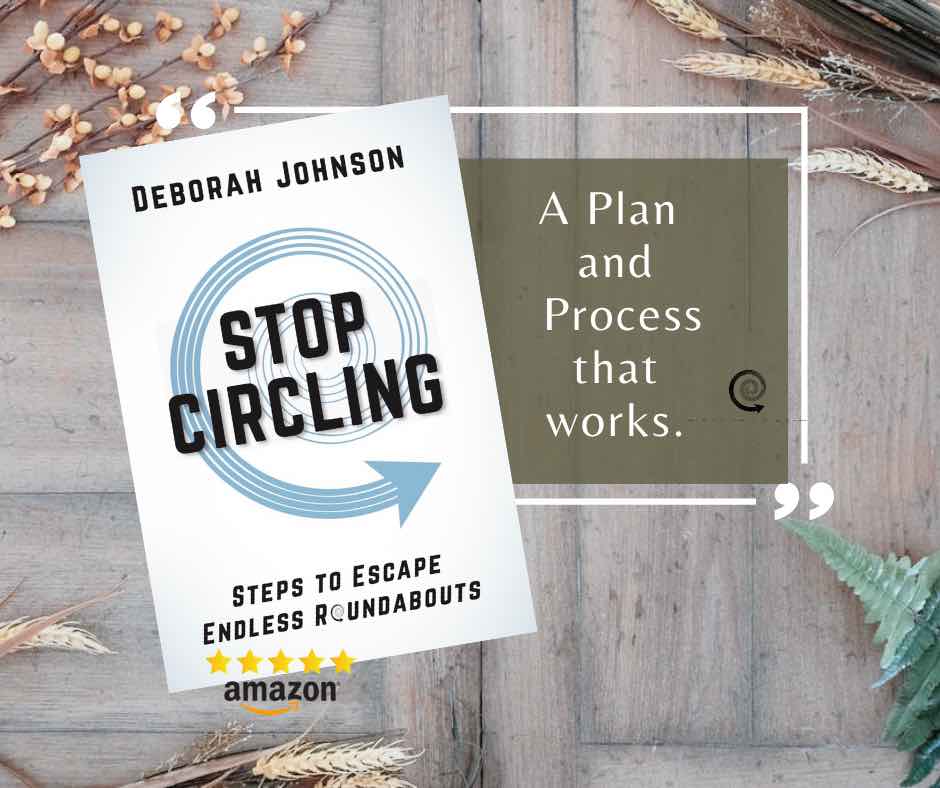
The Summit: Journey to Hero Mountain by Deborah Johnson: an inspiring journey to conquer self-doubt, fear, and criticism, including the protagonist’s own inner critic.
Power of After: What's Next Can Be Your Most Purposeful Chapter by Deborah Johnson
Hero Mountain Summit: Power of After 5-Step Framework: A 5-month entrepreneurial mentorship designed to help mid-life professionals break free from stagnation and rise toward purposeful success.
FREE Downloads: Goal Setting Worksheets ; Power of After 7 Ingredients for Success Guide
FREE Resources and links: https://GoalsForYourLife.com/DJWorks
YouTube Podcast Playlist (Subscribe!): Women at Halftime/Power of After
-marty strong
Marty Strong is a retired U.S. Navy SEAL officer and instructor of incoming SEALS, leadership and mindset expert with three Amazon bestselling books. Marty is also the CEO of the Veteran’s Foundation, Warrior’s Haven USA.
When people surround themselves with positive, growth-oriented individuals who pursue challenges with resilience and humor, they begin moving in that direction themselves.
deborah johnson
Thought Leader, Keynote Speaker, Author
If you are interested in growing and learning, check out our online courses here: Online Learning
1,564 words
